


Top Features of Patient-Mentor Interaction Platforms
Key Takeaways
Top Features of Patient-Mentor Interaction Platforms
Peer-to-peer mentorship platforms for patients are transforming healthcare by connecting individuals with mentors who share similar medical experiences. These platforms help patients overcome emotional resistance to treatment, improve adherence rates, and provide pharmaceutical companies with actionable insights. Key features include AI-driven mentor matching, HIPAA-compliant communication, and real-time sentiment analytics.
Key Takeaways:
- PatientPartner: Focuses on fast mentor matching (under 24 hours), AI-based pairing, and robust data security (HIPAA, GDPR certified). Boosts treatment adoption by 30% and adherence by 29%.
- Platform B: Targets healthcare professionals with structured mentorship programs, calendar integrations, and multi-format options. Offers high satisfaction rates (98%) but leans toward employee mentoring.
- Platform C: Specializes in patient services and support programs with quick connections and strong engagement tools but lacks specific healthcare compliance certifications.
Quick Comparison:
| Feature | PatientPartner | Platform B (MentorcliQ) | Platform C (Together) |
|---|---|---|---|
| Mentorship Speed | Matches in under 24 hours | Structured scheduling | Matches in less than 24 hours |
| Target Audience | Patients (150+ disease states) | Healthcare professionals | Patients |
| Data Compliance | HIPAA, GDPR, SOC 2, ISO 27001 | SOC 2 | Limited healthcare focus |
| Engagement Tools | Sentiment analytics, dashboards | Surveys, templates, analytics | Calendar syncing, surveys |
PatientPartner is ideal for pharmaceutical companies focused on patient adherence. Platform B caters to professional development, while Platform C serves mid-sized organizations with structured patient programs.
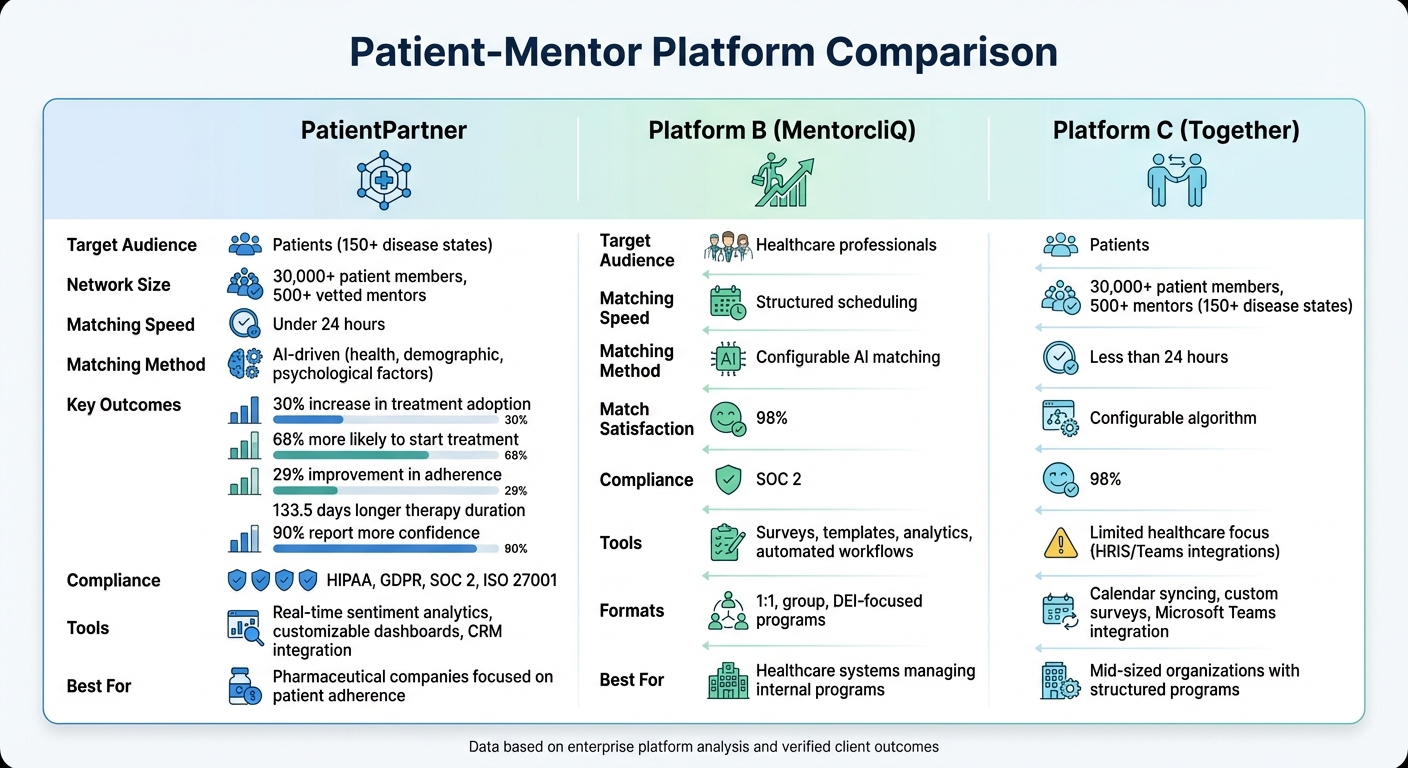
Patient-Mentor Platform Comparison: PatientPartner vs Platform B vs Platform C
1. PatientPartner
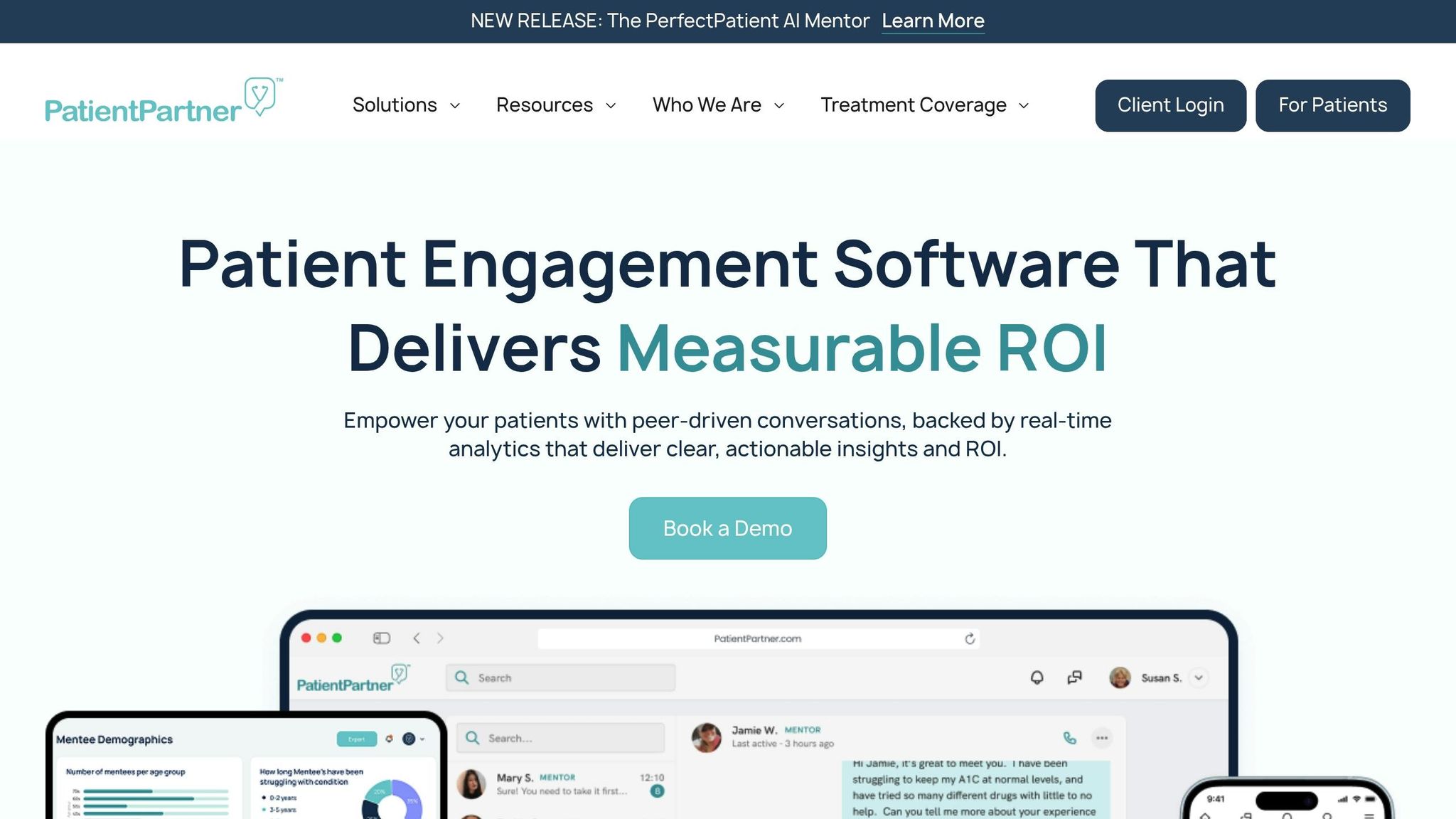
PatientPartner focuses on four key areas to enhance patient outcomes for pharmaceutical and med-tech companies. With a network of over 30,000 patient members and 500+ vetted mentors spanning 150+ disease states, the platform delivers proven results for its enterprise partners.
Real-Time Mentorship
PatientPartner connects patients with experienced mentors in under 24 hours, ensuring timely support during critical decision-making moments. This immediacy is essential, as delays can lead to treatment abandonment. Companies leveraging this approach have seen a 30% increase in treatment adoption within the first year.
Personalized Matching
Using an AI-driven algorithm, PatientPartner matches patients with mentors based on detailed, multidimensional profiles. This tailored approach significantly impacts outcomes - patients matched through the platform are 68% more likely to start their prescribed treatment, and 90% report feeling more confident about their treatment journey. These personalized connections are built on a foundation of trust, reinforced by stringent security protocols.
Data Security
PatientPartner prioritizes data protection with certifications like HIPAA, GDPR, SOC 2, and ISO 27001. The platform incorporates end-to-end encryption, role-based access controls, and thorough audit trails to ensure compliance. As the company emphasizes:
"Compliance is at the core of everything we do. PatientPartner's platform is fully HIPAA and GDPR compliant, employing end-to-end encryption, role-based access controls, and audit trails to protect patient data".
Engagement Tools
The platform also offers advanced tools to enhance patient and company interactions. Features like real-time sentiment analytics and customizable dashboards seamlessly integrate with existing CRM and EHR systems. These tools help companies proactively address adherence risks, leading to a 29% improvement in adherence and extending therapy durations by an average of 133.5 days.
Brad A. from Mainstay Medical shared, "Patient Partner has been influential in helping patients understand the benefits of our product, providing them with personalized guidance and real-life experiences to support their decision-making".
sbb-itb-8f61039
2. Platform B
Platform B caters to mid-sized healthcare employers and networks by focusing on mentorship programs aimed at leadership development and employee retention. It stands out with customizable templates and calendar integrations that make scheduling easier for healthcare professionals who often have packed schedules. Unlike PatientPartner's rapid-response model, Platform B offers a more structured approach to mentor matching.
Real-Time Mentorship
The platform facilitates real-time interactions through seamless integrations with tools like Outlook, Google Calendar, Microsoft Teams, and Zoom. These integrations help reduce the hassle of scheduling and ensure timely, efficient connections for healthcare professionals.
Personalized Matching
Platform B uses a customizable matching algorithm that boasts an impressive 98% satisfaction rate. By pairing mentors and mentees based on their skills, goals, and preferences, it delivers better outcomes than basic automated systems. Organizations can tweak the matching parameters to align with their specific program goals, making the process highly adaptable.
Engagement Tools
To keep participants engaged, Platform B provides features like custom surveys, pre-designed session templates, and automated email workflows. These tools allow healthcare organizations to monitor engagement levels and make data-driven improvements to their programs. Additionally, integration with HRIS systems and communication platforms ensures smooth coordination, even for distributed teams.
3. Platform C
Platform C stands out by focusing solely on patient-to-patient mentorship, catering specifically to pharmaceutical and med-tech companies. With over 30,000 patient members and 500+ mentors spanning 150+ disease states, the platform offers an extensive network of support. This specialized approach sets it apart in the competitive world of mentorship solutions.
Real-Time Mentorship
One of Platform C's key strengths is its ability to connect patients with mentors who have faced similar health challenges, often within less than 24 hours. This quick turnaround ensures patients receive timely advice during critical moments, whether they're considering new treatments, medications, or surgical options. The real-time connections create a dependable peer-to-peer support system when it’s needed most.
Personalized Matching
Platform C takes matching seriously, using a proprietary AI algorithm to pair patients with mentors based on health conditions, demographics, psychological needs, and more. Mentors are carefully vetted, undergoing background checks, compliance training, and regular evaluations. This rigorous process pays off - 90% of patients matched with mentors report feeling more confident about their treatment decisions.
Data Security
Security and privacy are top priorities for Platform C. The platform is fully certified under HIPAA, GDPR, SOC 2, and ISO 27001 standards, with end-to-end encryption safeguarding all communications. Automated monitoring ensures compliance, while role-based access controls and detailed audit trails prevent unauthorized access to sensitive data.
Engagement Tools
Platform C doesn’t just connect patients - it empowers enterprise teams with tools to measure success. Customizable dashboards provide real-time insights into patient engagement, new start metrics, and overall program performance. Sentiment analytics help identify concerns and potential adherence risks. The results are clear: patients who work with mentors are 68% more likely to start their prescribed treatment, see a 29% boost in adherence, and stay on therapy for an average of 133.5 days longer than those without mentorship.
Advantages and Disadvantages
When considering patient-mentor interaction platforms, it's important to weigh their strengths and potential drawbacks. Here's a breakdown of how three platforms - PatientPartner, Platform B, and Platform C - compare, helping decision-makers assess which aligns best with their needs.
PatientPartner uses AI to match patients based on health, demographic, and psychological factors, facilitating real-time connections. It boasts strong security credentials, including HIPAA, GDPR, SOC 2, and ISO 27001 certifications, and offers tools like real-time sentiment analytics and customizable dashboards for monitoring engagement and managing risks. On the flip side, its deployment timeline can take up to four months, which might delay implementation. Additionally, its focus on enterprise-level applications could make it less accessible for smaller healthcare providers.
Platform B (MentorcliQ) also features AI-driven matching but stands out with its multi-format mentoring options, including 1:1, group, and DEI-focused programs. Its SOC 2 certification ensures secure data handling, and its analytics provide insight into engagement and ROI. However, the platform’s complexity might pose challenges for smaller organizations, and its emphasis on employee mentoring means additional customization could be needed for patient-focused use cases in the pharmaceutical industry.
Platform C (Together) relies on a configurable algorithm that achieves a 98% match satisfaction rate using structured templates. Features like calendar syncing, custom surveys, and Microsoft Teams integration enhance engagement, while HRIS integrations support secure data management. However, its setup process can be time-consuming, and its reliance on Microsoft integrations may limit flexibility for mobile-focused patient applications. Additionally, it lacks explicit healthcare regulation certifications unless further customized.
| Feature | PatientPartner | Platform B (MentorcliQ) | Platform C (Together) |
|---|---|---|---|
| Mentorship Capabilities | Real-time peer-to-peer guidance; supports 150+ disease states | AI-driven matching with multi-format options (1:1, group, DEI) | Structured program templates with program health insights |
| Matching Accuracy | AI-powered for health, demographic, and psychological factors | Configurable AI matching | Configurable algorithm with 98% match satisfaction |
| Data Compliance | HIPAA, GDPR, SOC 2, and ISO 27001 certified | SOC 2 certified | Relies on HRIS/Teams integrations; lacks explicit regulatory certifications |
| Engagement Tools | Real-time sentiment analytics, customizable dashboards, CRM integration | Comprehensive analytics, surveys, and automated nudges | Calendar syncing, custom surveys, and templates |
Conclusion
This analysis highlights the importance of customized mentorship in improving patient engagement and treatment adherence. When choosing a patient-mentor interaction platform for pharmaceutical or med-tech applications, the decision should align with your organization's specific goals and priorities.
PatientPartner is an excellent choice for companies aiming to boost new patient starts and ensure long-term treatment adherence. Its real-time mentorship model connects prospective patients with experienced guides while maintaining compliance with stringent regulations like HIPAA, GDPR, SOC 2, and ISO 27001 certifications. This focus on regulated environments makes it particularly effective for driving outcomes in healthcare contexts .
On the other hand, Platform B (MentorcliQ) is better suited for organizations that prioritize advanced analytics and multi-format mentoring. It shines in analytics-heavy settings, offering tools for ROI tracking and configurable AI matching. These features make it ideal for large healthcare systems managing complex internal programs alongside patient initiatives. However, its primary focus on employee mentoring and DEI programs may require additional adaptation for patient-facing pharmaceutical needs .
Platform C (Together) offers a strong scheduling framework and high match satisfaction, making it a good fit for mid-sized organizations with structured program requirements. Its calendar syncing and custom survey tools support engagement tracking effectively. However, its time-intensive setup process and lack of healthcare-specific certifications could pose challenges for deployment in regulated environments. Organizations already using Microsoft Teams may find its deep integration particularly beneficial .
FAQs
How does AI-powered mentor matching benefit patients?
AI-powered mentor matching offers customized support by considering each patient’s specific needs, including their health conditions, personal background, and emotional preferences. This thoughtful pairing creates deeper connections between patients and mentors, helping to improve treatment adherence, ease anxiety, and boost confidence in managing health challenges.
With the help of advanced algorithms, the platform carefully matches patients with mentors who align closely with their circumstances. This ensures the advice and guidance provided feel relevant and practical, which can lead to stronger engagement and better long-term health outcomes. Plus, real-time feedback allows the mentorship process to adjust as patients make progress, tackling obstacles more effectively and promoting greater success.
How do patient-mentor platforms ensure data security and privacy?
Patient-mentor platforms like PatientPartner prioritize data security to protect patient information and comply with healthcare regulations. They use tools like end-to-end encryption to secure data during transmission, role-based access controls to limit access to sensitive information, and detailed audit trails to monitor and prevent any unauthorized activity.
These platforms also adhere to strict regulatory standards, such as HIPAA in the United States, ensuring that sensitive data remains protected. To strengthen security further, they conduct regular staff training on privacy protocols and perform routine security audits. This commitment helps build trust and provides a safe space for patient-mentor interactions.
Why is it essential for patient mentorship platforms to comply with HIPAA regulations?
HIPAA compliance is all about protecting sensitive patient information, and for patient mentorship platforms, it's non-negotiable. It ensures that personal health data stays private and that communication between patients and mentors is secure. This layer of protection doesn’t just safeguard information - it also helps build trust. After all, users are far more likely to engage with a platform they know takes their privacy seriously.
But there’s more to it than just trust. Staying compliant also shields organizations from legal trouble and hefty fines. Beyond the financial risks, a breach of compliance can seriously harm a platform’s reputation, making it harder to recover in the long run. Emphasizing HIPAA compliance shows that a platform prioritizes patient safety and handles data responsibly. It’s a win-win for everyone involved.
Author